AI-Powered Product Descriptions That Convert: Step-by-Step Guide
In the fast-paced world of eCommerce, the sheer volume of writing required can be overwhelming. If you manage a store with hundreds of SKUs, writing unique, compelling copy for every single item feels like an impossible task.
This is where AI product descriptions come in to save the day. But let’s be clear: simply asking ChatGPT to "write a description for a t-shirt" will result in generic, robot-sounding fluff that converts no one.
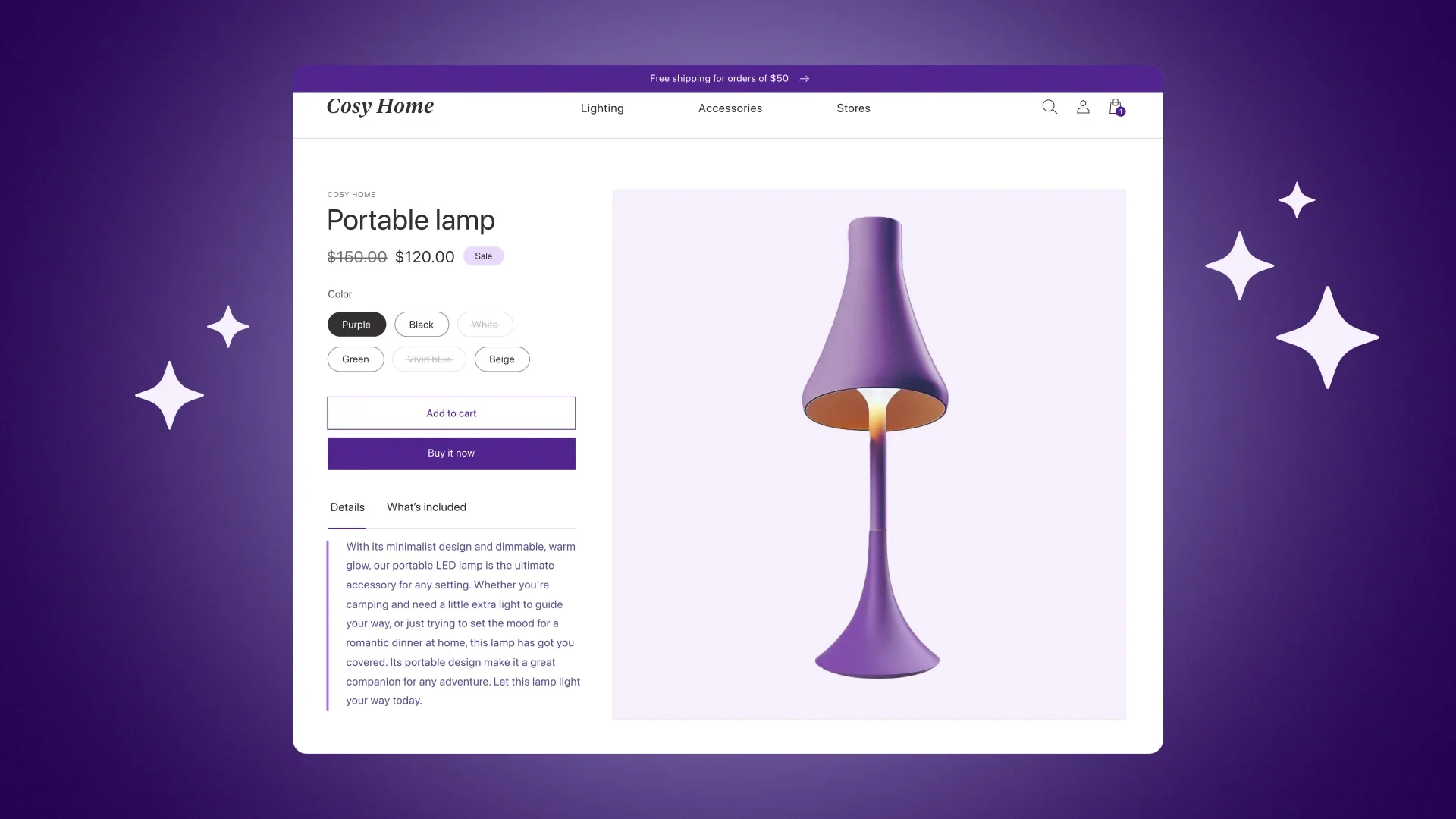
To truly succeed, you need a strategy that blends the speed of artificial intelligence with the nuance of human psychology. You need descriptions that not only rank on Google but also tell a story that convinces a visitor to click "Add to Cart."
In this guide, we will walk you through a proven step-by-step process to generate high-quality AI product descriptions that drive sales, save time, and keep your brand voice intact.
Key Takeaways
Prompt Engineering Matters: The quality of your AI output depends entirely on the specificity of your input (context, tone, and format).
SEO Integration: AI needs guidance on keywords; otherwise, it will miss the terms your customers are actually searching for.
Storytelling Increases Dwell Time: Narratives keep users on the page longer, which signals to Google that your page is valuable.
Formatting for Skimmers: AI can structure content into bullet points, making it easier for mobile users to digest.
The Human Audit: AI is a drafter, not an editor. You must review for uniqueness to avoid "duplicate content" penalties.
Table of Contents
Step 1: Define Your Core Keywords
Before you even open your AI tool, you need to know what you are targeting. AI is excellent at writing, but it doesn't know your SEO strategy unless you tell it.
The first step in creating effective AI product descriptions is identifying the main keyword for each product.
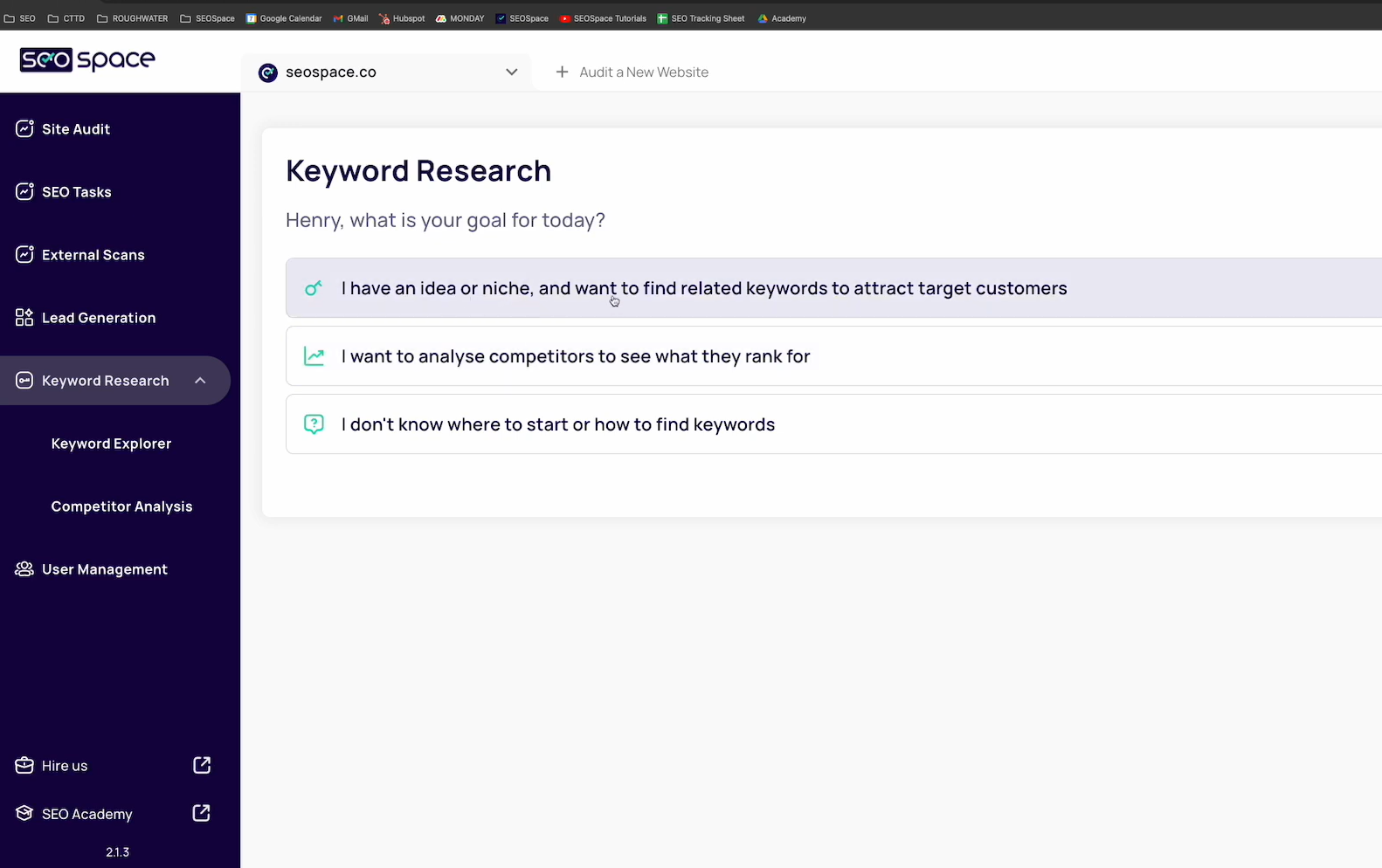
If you are selling a "hand-poured soy candle," that phrase needs to appear naturally in your product title and the body of the description. When prompting your AI, you should explicitly say: "
Include the keyword 'hand-poured soy candle' naturally in the first sentence."
If you skip this step, you might end up with a beautiful description that no one ever finds because it doesn't match what users are typing into the search bar.
Step 2: The "Unique Value" Rule
One of the biggest risks with AI product descriptions is generating content that sounds exactly like everyone else.
If your AI writes the same generic description for your "Blue Cotton Shirt" as your competitor's "Blue Cotton Shirt," Google might flag it as duplicate or low-value content.
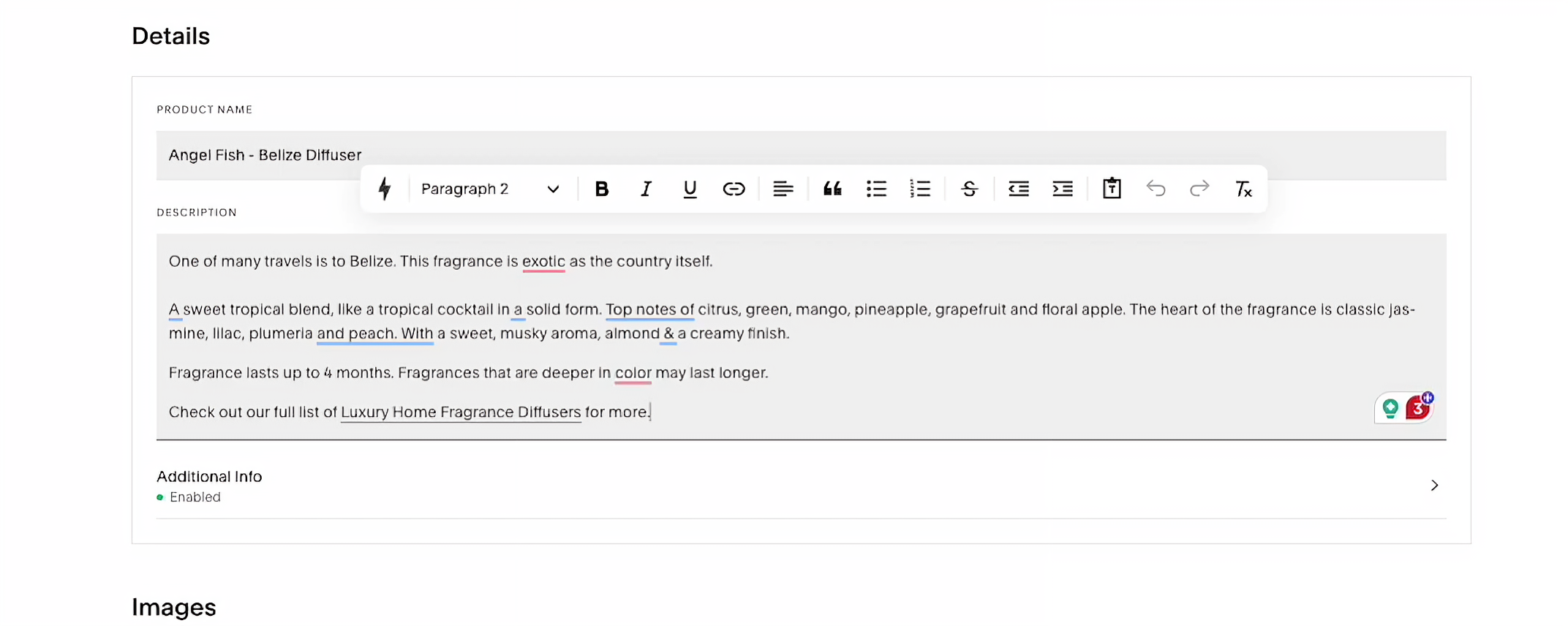
To prevent this, you must feed the AI specific, unique details about your product. Do not just list specs; list the "why."
Bad Input: "Write a description for a blue shirt."
Good Input: "Write a description for a blue shirt made of 100% organic Peruvian cotton. Mention that it features reinforced stitching for durability and is pre-shrunk."
The more unique data points you provide, the more unique the output will be. This helps Google understand that your product is distinct and worthy of ranking above the competition.
Step 3: Prompting for Storytelling
Here is a secret that most technical SEOs miss: Google looks at "dwell time" (how long a user stays on your page). If a user lands on your product and leaves in three seconds, your rankings drop. If they stay to read, your rankings rise.
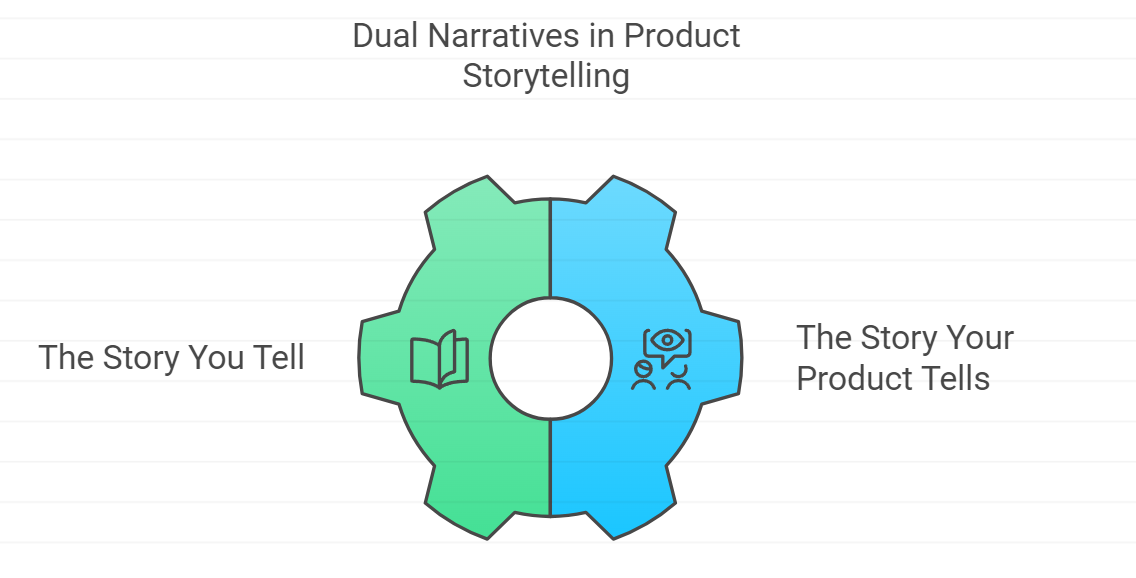
The best way to keep them reading? Storytelling.
When generating AI product descriptions, ask the AI to weave a narrative. Instead of just saying "This coffee mug keeps drinks hot," prompt it to say: "Imagine sitting on your porch on a crisp autumn morning, the steam rising from your mug, keeping your coffee piping hot for hours while you watch the sunrise."
This emotional connection does two things: it engages the human reader, making them more likely to buy, and it keeps them on the page longer, which boosts your SEO signals.
Step 4: Formatting for Features and Benefits
Giant walls of text kill conversion rates. Mobile shoppers specifically need information fast. When using AI, you should explicitly command it to format the output for readability.
Ask your AI tool to separate the "Features" (what it is) from the "Benefits" (what it does for the user).
Feature: Double-walled insulation.
Benefit: No more burnt hands or cold tea.
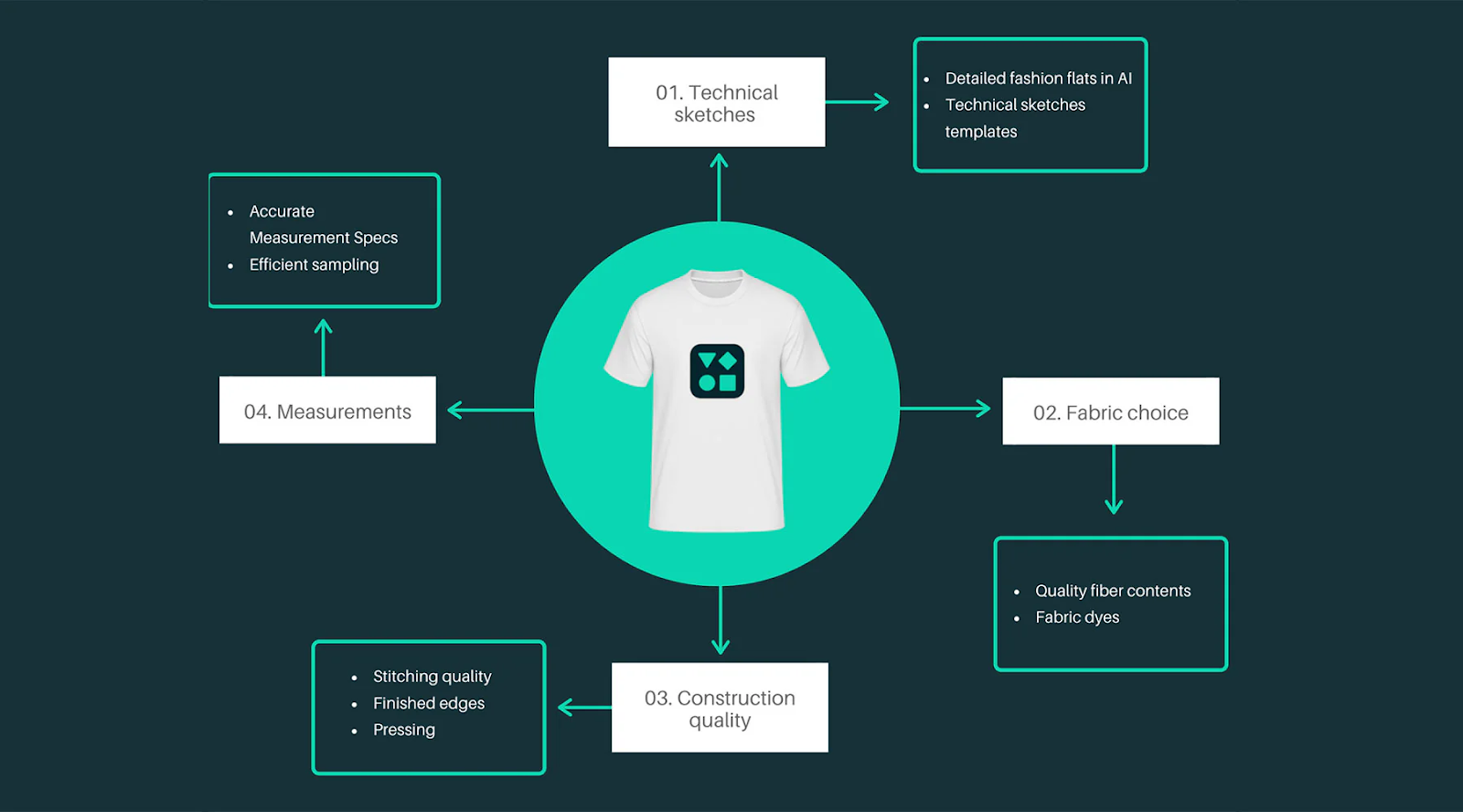
Instruct the AI to present these as bullet points. This structure helps Google's bots crawl and index your content more efficiently, and it allows customers to scan the page and hit the "Buy" button without friction.
Step 5: The Technical SEO Check
Once you have your text, the final step involves the technical elements that AI often overlooks: the URL slug, the SEO Title, and the Meta Description. These are the behind-the-scenes tags that appear in search results.
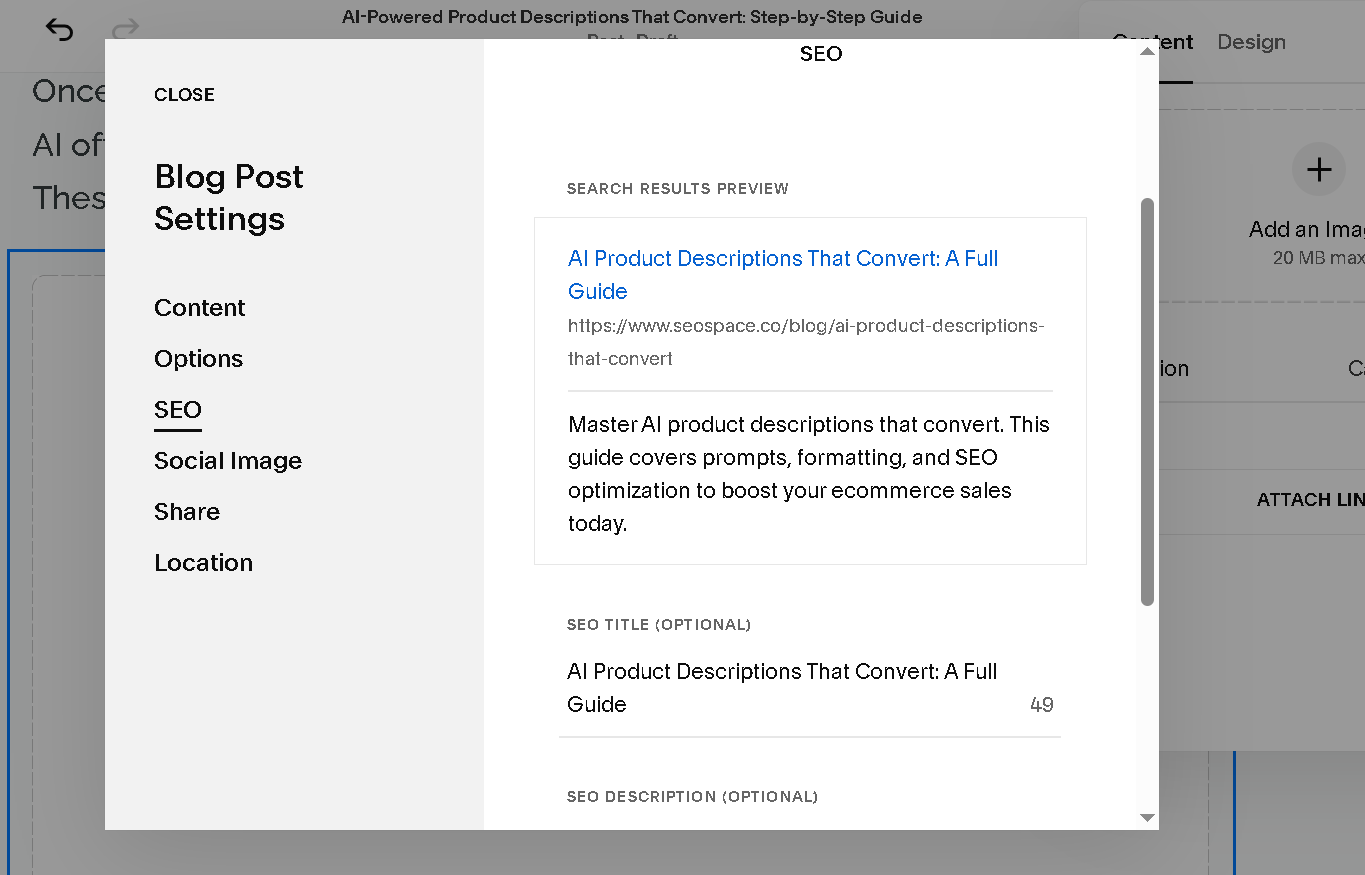
You can ask AI to generate these as well. For example: "Write a meta description under 160 characters for this product that includes the keyword 'organic face cream' and ends with a call to action."
However, pasting this content onto your site isn't enough. You need to verify that it actually works.
The Essential Tool for Squarespace Users
If you are running your store on Squarespace, you don't have to guess if your AI product descriptions are optimized. You should use SEOSpace, a specialized plugin that acts as your SEO safety net.
It scans your product pages to ensure your keywords are in the right places, your descriptions are the correct length, and your technical tags are set up for success.
Stop Guessing with Your SEO
Don't let your beautiful descriptions go to waste. Download the SEOSpace plugin for free and audit your product pages today to ensure they are primed for Google.
Conclusion
AI is a powerful engine, but you are the steering wheel. By following this step-by-step guide, you can transform generic AI outputs into high-converting, SEO-friendly assets. Remember, the goal of AI product descriptions is not just to fill space on a page; it is to provide value, tell a story, and guide the user toward a purchase.
Combine your unique product knowledge with the efficiency of AI, and verify your work with tools like SEOSpace. This is the formula for scaling your eCommerce store in 2025.
Get a free site audit, Start prompting today, and watch your conversion rates climb.
Frequently Asked Questions
-
No, Google does not penalize content just because it is written by AI. They penalize low-quality or spammy content. As long as your AI product descriptions are unique, helpful to the user, and accurate, they will rank just fine.
-
There is no perfect word count, but generally, 300 words is a good target for SEO. This provides enough depth for Google to understand the page without overwhelming the user.
-
Absolutely not. Duplicate content is a major SEO issue. Even if two shirts are identical except for color, you should try to vary the descriptions slightly or use "canonical tags" to tell Google which version is the main one.
-
ChatGPT, Claude, and Jasper are all excellent. The "best" tool matters less than the quality of your prompt. Focus on giving the AI clear instructions about tone, keywords, and formatting.
-
You need to audit them. We recommend using the SEOSpace plugin to scan your pages. It will give you a traffic light score (Red/Amber/Green) and tell you exactly what you need to fix to improve your rankings.