AI Visibility: The New Metric Every SEO Should Be Tracking in 2026
The landscape of search engine optimization is in constant flux, but every few years, a seismic shift redefines our strategies. We’ve seen the rise of mobile-first indexing, the dominance of semantic search, and now, the advent of AI-powered search experiences.
In this rapidly evolving environment, a new, critical metric is emerging: AI visibility.
For any SEO professional aiming to stay ahead in 2026, understanding and optimizing for AI visibility isn't just an advantage, it's a necessity.

Key Takeaways:
AI visibility measures how frequently and effectively your content is utilized by AI models in generating search results and conversational AI responses.
Traditional SEO metrics, while still important, are insufficient for measuring performance in an AI-first search world.
Optimizing for AI visibility requires a shift towards highly structured, contextually rich, and factually robust content.
Early adopters of AI visibility strategies will gain a significant competitive advantage.
Table of Contents
What is AI Visibility?
AI visibility can be defined as the measure of how accessible, interpretable, and ultimately, how frequently and accurately your content is surfaced and integrated into responses generated by artificial intelligence systems.
This goes beyond traditional rankings on a Search Engine Results Page (SERP). Instead, it evaluates your content's presence in direct answers, summaries, conversational AI chatbots, and even proactive information delivery systems powered by AI. It’s about being the source that AI trusts and uses.
Why is AI Visibility So Crucial Now?
The reason for the sudden importance of AI visibility is clear: search is no longer just about clicking blue links.
With the proliferation of large language models (LLMs) like those powering Google’s Search Generative Experience (SGE), Bing Chat, and other AI assistants, users are increasingly receiving direct answers compiled from various sources.
If your content isn’t contributing to these answers, you’re missing out on a significant portion of user interaction and potential traffic.
Imagine a world where a user asks a complex question and an AI provides a comprehensive answer, potentially referencing multiple sources without the user ever visiting a single website directly. Your goal is for your site to be one of those referenced sources, thus achieving high AI visibility.
How AI Models Leverage Your Content
AI models consume vast amounts of data to understand concepts, establish relationships, and generate coherent responses. They don't just "read" your content; they analyze its structure, semantic meaning, factual accuracy, and authority.
This means well-organized headings, clear paragraphs, structured data, and authoritative backlinks contribute not just to traditional SEO but directly to your AI visibility. For instance, an AI might pull a specific data point from a table on your site, summarize a "how-to" guide, or use a definition you've provided to answer a user's query.
Measuring AI Visibility: New Tools and Approaches
Measuring traditional SEO metrics like keyword rankings and organic traffic remains important. However, assessing AI visibility requires new approaches. While specific tools are still evolving, here are some indicators and methods:
Direct Answer/Featured Snippet Tracking: While not perfectly aligned, success in featured snippets often correlates with content that AI finds easy to extract.
Log File Analysis: Monitor for increased bot activity from AI-specific crawlers, though this can be difficult to differentiate.
Third-Party AI Content Audits: Specialized tools are emerging that can simulate AI queries and report which sources they pull from.
Semantic Overlap Scores: Analyzing how well your content aligns semantically with common AI-generated answers for your target queries.
Engagement with AI Interfaces: Tracking if your brand or content is mentioned or linked within AI-generated responses (e.g., through specific tracking parameters or branded queries).
You might find some helpful insights into analyzing data by watching videos like this one from our channel.
Strategies to Enhance Your AI Visibility
Optimizing for AI visibility requires a proactive and nuanced approach. Here are key strategies:
Semantic Richness and Depth:
Comprehensive Coverage: Go beyond basic answers. Provide in-depth, authoritative content that fully explores a topic from multiple angles. AI values completeness.
Contextual Understanding: Use related keywords, synonyms, and natural language. Avoid keyword stuffing; focus on topical authority.
Clear Definitions and Explanations: Define key terms explicitly. AI models often use these for direct answers.
Structured Data and Schema Markup:
Implement Schema Markups: Use JSON-LD to clearly label entities, facts, and relationships within your content. This is a direct signal to AI about what your content contains. Think about Article, FAQPage, HowTo, Product, Review, etc. Learn more about schema markup best practices on Schema.org.
Use Tables and Lists: Present data in structured formats that are easy for AI to parse and extract.
Authoritativeness and Trust:
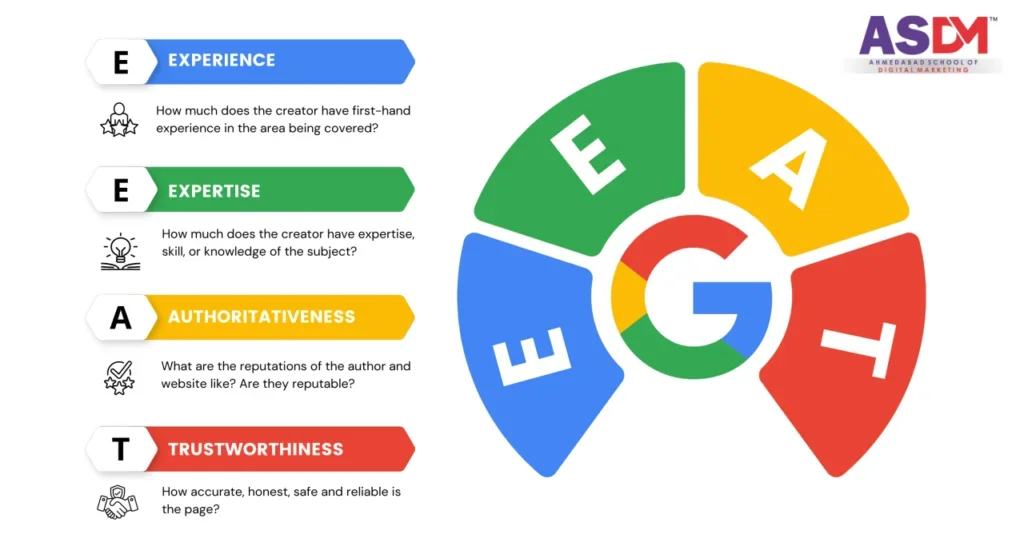
E-E-A-T (Experience, Expertise, Authoritativeness, Trustworthiness): Google's E-E-A-T guidelines are more critical than ever for AI visibility. Ensure your content is created by experts, backed by data, and free from errors. Check out Google’s own guidance on E-E-A-T for deeper understanding.
Citations and References: Link to reputable sources where appropriate. This builds trust and provides AI with verifiable information. For instance, citing research from a leading institution like Stanford University or referencing economic data from the World Bank enhances credibility.
Clarity and Conciseness:
Direct Answers: Craft specific sections that directly answer common questions succinctly.
Summaries: Provide clear introductions and conclusions that summarize the main points. AI often uses these for quick overviews.
Avoid Ambiguity: Use precise language. AI models struggle with vague or overly complex phrasing.
Technical SEO Foundations:
Crawlability and Indexability: Ensure your site is easily crawlable and indexable by all search engine bots, including those specifically designed for AI. Utilize tools like Google Search Console to monitor this.
Site Speed and Mobile Friendliness: While not directly an AI visibility factor, a fast, mobile-friendly site provides a better user experience, which AI often considers in its evaluation of content quality. Web.dev offers excellent resources for improving these aspects.

Unique and Valuable Insights:
AI models are trained on vast datasets. To stand out, your content needs to offer unique perspectives, proprietary research, or original analysis that isn't readily available elsewhere. This makes your content a more valuable source for the AI.
The Future of Search: Beyond Traditional SERPs
The shift towards AI-powered search means a fundamental change in how users interact with information. Traditional SERPs might become less about a list of ten blue links and more about dynamic, personalized, and context-aware responses. Your AI visibility will determine whether your brand is part of that conversation.
Consider how voice search and personal assistants like Siri, Alexa, and Google Assistant are already delivering direct answers. These systems rely heavily on content optimized for extractability.
Similarly, enterprise AI applications and knowledge graphs within large corporations will increasingly pull from public and private data sources. Understanding this broader ecosystem is key to long-term success. Get a free audit to start your process.
Conclusion
The rise of AI in search is not a distant future; it's happening now. SEO professionals who adapt quickly to the imperative of AI visibility will be the leaders of tomorrow.
By focusing on semantic richness, structured data, authoritativeness, and clear communication, you can ensure your content isn't just ranking, but truly seen and utilized by the intelligent systems shaping the next generation of search.
Ready to enhance your AI visibility and stay ahead of the curve? Start your free trial today with SEO Space and unlock powerful tools designed for the future of search.
Frequently Asked Questions
-
Traditional SEO focuses on ranking for keywords on a SERP, while AI visibility emphasizes making your content easily extractable and usable by AI models to generate direct answers and summaries, often without a direct click to your site.
-
No, traditional SEO metrics like organic traffic, keyword rankings, and technical SEO foundations remain crucial. They form the bedrock upon which strong AI visibility is built, ensuring your content is discoverable in the first place.
-
Immediately. AI-powered search features are already integrated into major search engines. The sooner you start optimizing for AI visibility, the greater your competitive advantage will be.
-
While critical, structured data is one of several important factors. Semantic richness, content authority (E-E-A-T), clarity, and unique insights also play significant roles in maximizing your AI visibility.
-
Absolutely. AI values high-quality, authoritative, and well-structured content regardless of brand size. By focusing on niche expertise and providing exceptional value, small businesses can achieve excellent AI visibility within their specific domains.